
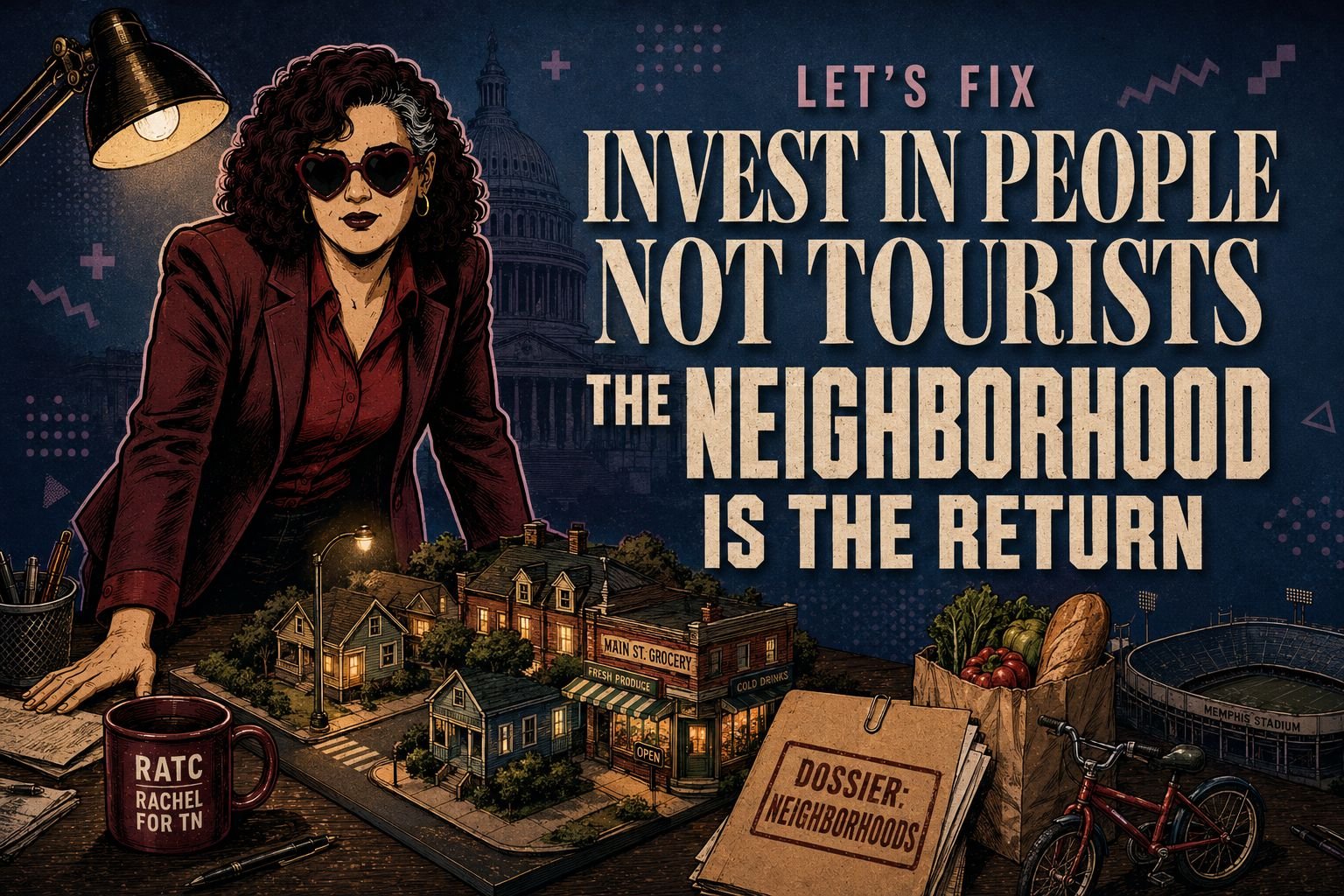
Let’s talk about economic development, because every city in America plays the same game.
The showpiece projects get the headlines and the political muscle – stadiums, arenas, convention centers, entertainment districts. The pitch is always the same: visitors will come, spending will follow, and the benefits will trickle down to everybody. Meanwhile, the neighborhoods two miles away wait on streetlights, sidewalks, decent housing, and a grocery store.
It’s the same trickle-down economics crap we’ve been sold for 40 years.
Look – economists disagree about almost everything, but not this. In one survey, 86% of American economists said state and local gov’ts should stop subsidizing pro sports teams. When the University of Chicago asked a panel of top economists – including seven Nobel winners – 57% agreed that stadium subsidies cost taxpayers more than they return. Only 2% disagreed. The rest weren’t sure. And researchers went through more than 130 studies covering 30 years and found the same thing. Stadium subsidies produce little or no new local growth. Most of the spending just shifts from one local business to another.
Now here’s the opposite bet.
Some of the strongest economics research of the last decade tracked millions of kids to answer one question: does the neighborhood itself change a child’s life?
The answer is yes. Kids whose families moved to lower-poverty neighborhoods before age 13 went to college more, earned more as adults, and raised their own kids in better places. Every year spent in the better neighborhood added about 4% to what those kids earned as adults. The neighborhood is the intervention.
And Memphis has a version of this story. Frayser’s community development corporation has spent years fixing blighted houses, and it reports that the work raised nearby property values and strengthened the tax base. I want that analysis made public so residents can judge the return for themselves.
So the position is simple. Stop measuring economic development by what it does for visitors. Start measuring it by what it does for the people already here.
The biggest flexible money neighborhoods get from Washington comes through a few programs – block grants that fund sidewalks, housing repair, and small business support, the HOME program that builds affordable housing, and Choice Neighborhoods, a smaller competitive program that rebuilds distressed housing and the blocks around it.
The administration tried to kill the block grants and HOME in its 2026 budget. Congress restored them. Its 2027 budget tries to kill them again. So far the House has said no to full elimination, but its bill would cut HOME by more than half. That fight isn’t over, and it keeps coming back.
Then there’s the money a member can steer directly.
Every member of the House, including freshmen, can request community project funding for their district each budget cycle. Members were capped at 15 requests this year, and not every request gets funded. But it’s one of the few tools in the building where a freshman can put projects from home on the list next to everyone else’s. Steve Cohen has delivered nearly $69 million of it since 2021 – senior housing, home repair for low-income seniors, youth facilities, housing for homeless veterans. He also helped land a separate $2.69 million competitive transportation grant to start planning how to reconnect the North Memphis neighborhoods the interstate cut apart.
Andy Ogles has declined to request any of it. That’s his stated position – he opposes the earmark process itself. So local gov’ts and nonprofits in his district lose their House member’s shot at that pool of money. They can still chase competitive grants, or go through Tennessee’s senators. But not because their congressman asked and lost. Because he won’t ask.
Well, I’d ask. And I know what I’d ask for first, because in one area, they already told me.
At a meet-the-candidate event SCORE CDC held in South City, I asked what the neighborhood actually needs. The answer came back without a pause: a grocery store.
The Kroger at Southgate closed in 2018. A discount grocer took over the space later that year, and people have stitched the rest together – a farmers market, a mobile grocery trailer, corner stores. And still, when I asked what the neighborhood needs, the first answer was a grocery store. That tells you how thin food access is down there – one store carrying a whole section of the city. And it’s a fundable ask – there’s a federal program, the Healthy Food Financing Initiative, built to help bring grocery stores back to neighborhoods the chains walked away from.
Now I can’t zone land, and I can’t pick which corner gets the store – that’s city and county work. What the seat I’m running for controls is whether the neighborhood money exists, who fights for it when the budget knives come out, and what gets requested by name for this district.
So here’s my economic development plan in one sentence: ask the neighborhoods what they need, request the money by name, and publish every request so you can check my math. South City already gave me the first item on the list.