
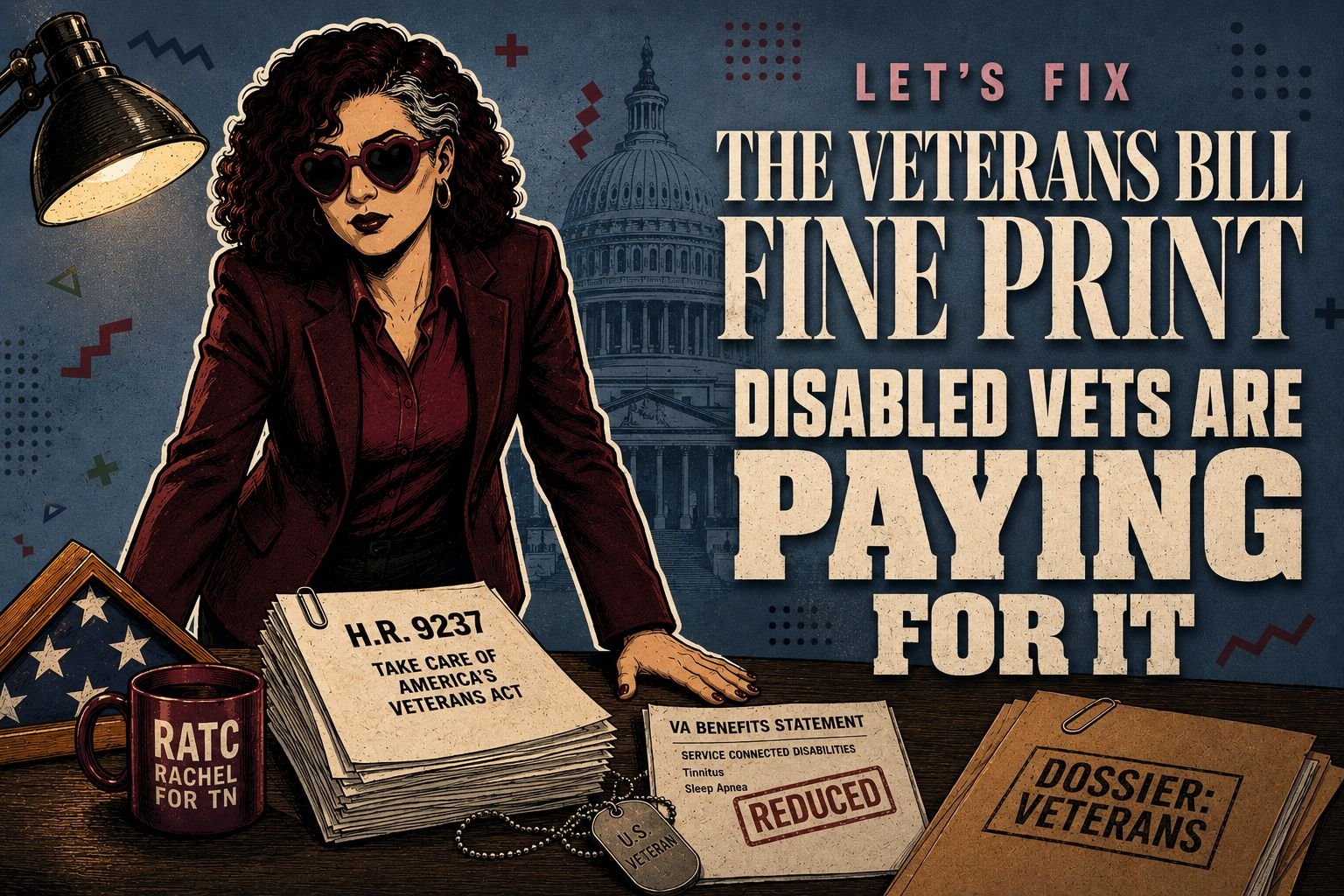
Let’s talk about veterans, because there’s a 554-page veterans bill moving through Congress right now, and most of what’s in it is good. The way it’s paid for is not – and they’re hoping you don’t read that far.
It’s called the Take Care of America’s Veterans Act – H.R. 9237. It bundles more than 60 bills into one package, and a lot of them are things veterans’ groups have wanted for years. It lets the VA partner with rural hospitals so a veteran doesn’t drive two hours for an appointment. It makes overdose rescue medication free at VA pharmacies. It puts money into mental health care, caregivers, and the claims backlog.
Now here’s the trick.
The bill primarily pays for it by cutting future disability payments for sleep apnea and tinnitus – up to $57 billion over 10 years, affecting up to 1.5 million current and future veterans. That’s by the bill’s own numbers. It’s not what the sponsors emphasize. It’s buried in the fine print of a bill literally named “Take Care of America’s Veterans,” and it’s moving fast.
The way they wrote it is slick, too.
When the VA approves a disability claim, it gives you a rating – a percentage that says how much your condition affects you, and that percentage sets the size of your monthly check.
Tinnitus today is usually rated at 10%, which is worth about $180 a month. This bill lowers what those conditions can be rated going forward. Veterans already receiving benefits generally keep the ratings they have.
So, the cuts fall mainly on future claims – meaning the next soldier who comes home with the same ringing ears gets a smaller rating, and a smaller check, than the veteran sitting next to him at the VA today. They aimed the cut at people who can’t complain yet, because those veterans haven’t come home yet. (Remember how I talked about this being the play for how they’ll defund Social Security?)
Tinnitus is the ringing in your ears that never stops. It’s the most common service-connected disability in the country, because that’s what years around gunfire, jet engines, and diesel generators do to a person. Sleep apnea is also commonly service-connected. These aren’t loopholes. They’re the wear and tear of the job.
Now, because we keep starting wars we don’t need to – VA disability spending has grown fast, and there are honest questions about how some conditions get rated. Wanting the program not to run out of money is a fair goal.
But the math tells on them.
Last year the Pentagon budget hit $1 trillion – the largest in American history. This year’s request is $1.5 trillion, a $445 billion jump in a single year. That’s bigger than the Reagan buildup. A $445 billion raise for the Pentagon in one year, next to a $57 billion cut to disabled veterans spread over ten. That single year’s increase is nearly eight times the entire decade of veterans’ cuts.
They found the money for weapons without blinking, and they’re taking the offset out of the disability checks of people who already paid with their ears and their sleep.
We fund what we value. If we can find $445 billion more for weapons in one year, we can afford veterans’ services – all of them, no offsets, no fine print, no bill sent to the people who already served.
Of course, a freshman Representative can’t rewrite a fast-tracked bill. But every member gets a vote, and I’d use mine to strip the pay-for and fund the care straight. If that fails, I’d say what this is, out loud, every time – a veterans bill financed by future disabled veterans, passed by people who just gave the Pentagon the biggest raise in history.
Sources
- Here are the 62 bills in the Take Care of America’s Veterans Act (Stars and Stripes)
- H.R. 9237 – Take Care of America’s Veterans Act (Congress.gov)
- New Bill Would Make Major Changes to Veterans’ Care (Newsweek)
- Republicans Advance Largest Pentagon Budget in History (House Appropriations Committee)
- Unpacking the $1.5 Trillion FY 2027 Defense Budget Topline (CSIS)